
– contains practical part
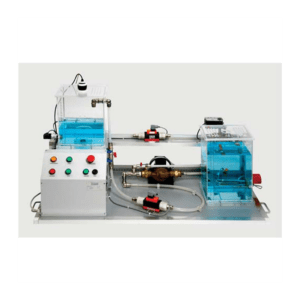
A bench-mount trainer for teaching Process Measurement & Control through the level, flow, temperature, and pressure.
The PT001 trainer includes all the required sensors and actuators to perform the full experiment list for teaching
process control and measurement. Using PT001, the student will acquire a better understanding and hands-on experience
in process control.
The PT001 was developed for use with National Instruments measurement and control platforms. It utilizes
platform features such as; real-time and FPGA processing, intelligent communication interfaces, rugged I/O modules,
among others. The industrial I/O modules filter, calibrate, and scale raw sensor signals to engineering units and
perform self-diagnostics.
The curriculum covered includes teaching the principles of acquiring different physical phenomena, On/Off Control,
PID control, Feedforward, and other types of control are used in the industry.
The whole system is connected to the specialized control software that is implemented in LabVIEW graphical programming language.
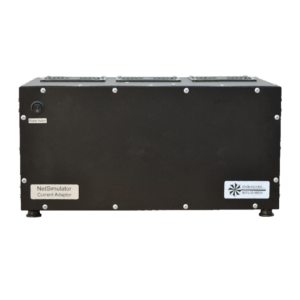
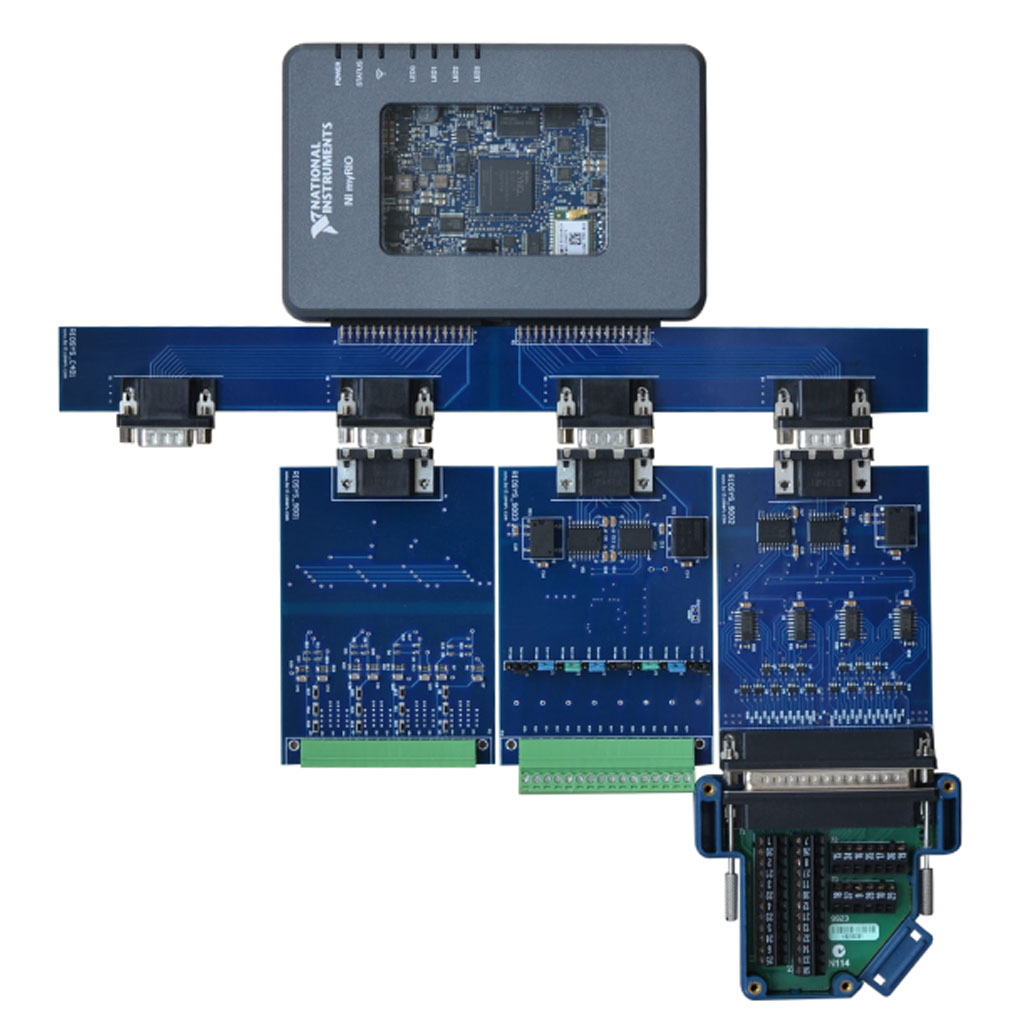
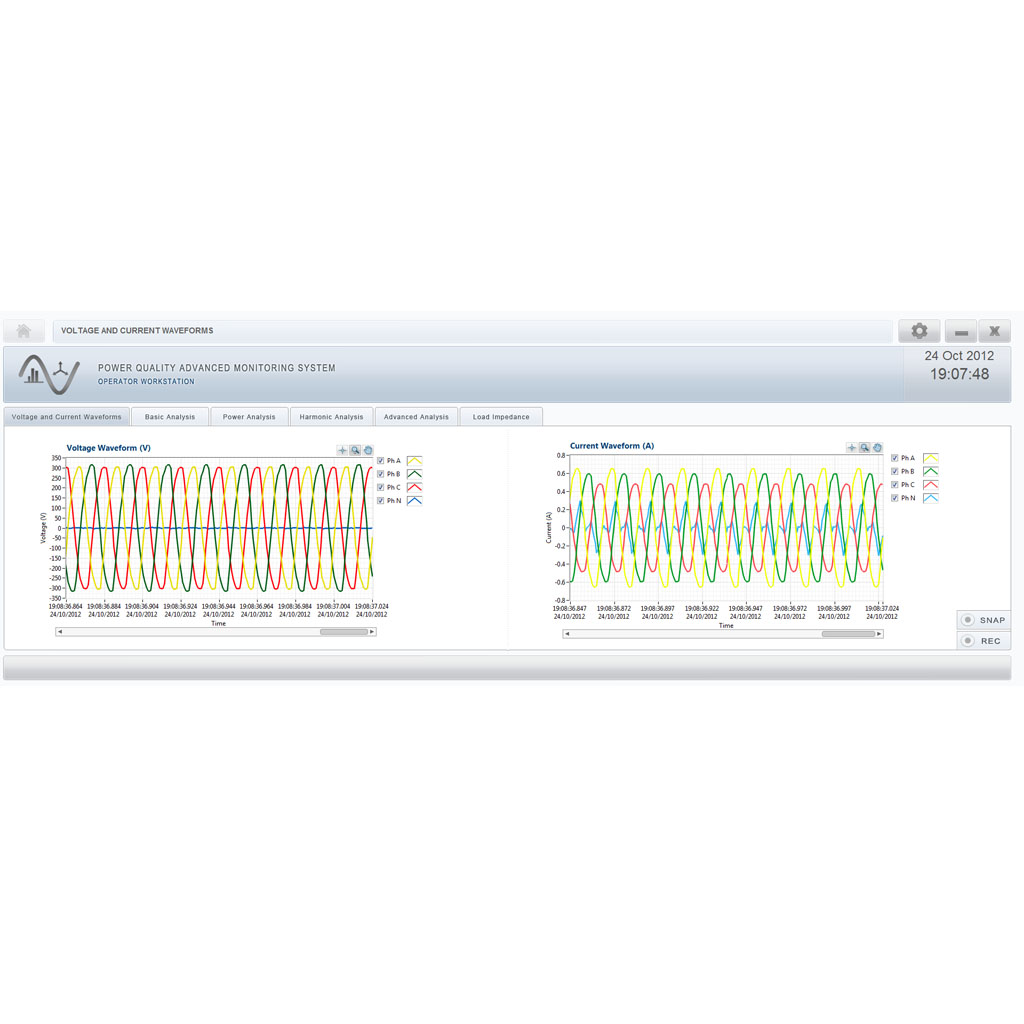
The NetSimulator Current Adaptor is used to generate real current flow from the simulated signal in 3phase power networks. It can be used together with Multipurpose IED, Relay Protection, and other devices.
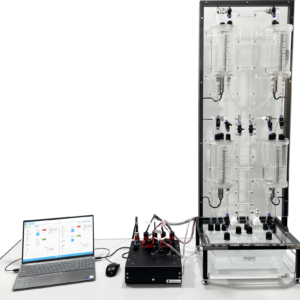
This system has various applications such as wastewater treatment, water desalination, pharmaceutical industries, and petrochemical plants. Among the challenging problems is the water level estimation which is needed for controlling the system. The quadruple tanks system consists of the two coupled tanks subsystem. Each of which consists of two translucent tanks, a pump and a water reservoir. The two tanks are mounted on the frame such that flow from the upper tank can flow, through an outlet orifice located at the bottom of the tank, into the lower. Flow from the second tank flows into the main water reservoir. The upper tanks also have another outlet orifice to provide the flow directly to the water reservoir. All outlets have manual valves to control the water flow. Each tank has a pressure sensor to measure the water level. The couplings between the tanks can be modified by the use of three tubes with different diameters (3/8″, 5/16″ and 1/4″) to change the dynamics of the system imposing the use of different controllers. Water is delivered to the tanks by two independently controlled pumps. The flow of each tank can be controlled programmatically from the software. The inlet flow from the pumps can be opened and closed via solenoid valves. The system is designed for researching different control algorithms. It comes with an open-source software allowing the users to develop their algorithms in LabVIEW environment.
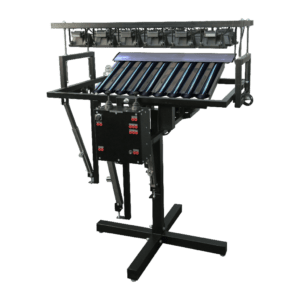
This option of the Solar Thermal Energy Trainer consists of a solar thermal panel and an array of halogen lamps as a sun simulator. The trainer allows studying the main principles of converting solar energy to thermal energy.